Pink Ball Rules in Cricket
Share this article
For well over a century, Test cricket was played in daylight with a red ball. The white ball arrived with limited-overs cricket and worked well under floodlights. But when administrators wanted to bring Test cricket to evening audiences — opening up prime-time broadcast windows and attracting working fans who couldn't attend traditional daytime matches — neither ball worked perfectly.
The solution was the pink ball. And with it came a new form of Test cricket: the day-night Test, where play begins in the afternoon, runs through the twilight hours, and concludes under floodlights.
This guide explains everything about the pink ball and day-night Test cricket — from why pink was chosen, to how the ball behaves on different surfaces, to the specific rules that govern the twilight session.
What is a Pink Ball?
The pink ball is a cricket ball specifically manufactured for use in day-night Test matches. Like the traditional red ball used in daytime Tests, the pink ball is made of leather with a seam, but it is dyed pink rather than red and treated with different lacquers and coatings to enhance its visibility under artificial floodlights.
The pink ball used in international cricket is produced by the same manufacturers who make the red and white balls — primarily Dukes (for England and West Indies Tests), Kookaburra (for Australia, South Africa, India, and most other nations), and SG (used in India for domestic and some international matches).
Each manufacturer's pink ball differs slightly in construction and coating — which affects how the ball behaves in different conditions. The Kookaburra pink ball, for instance, is known to behave differently from the Dukes pink ball in terms of seam movement, swing, and wear characteristics.
Why Pink Instead of Red or White?
The choice of pink over red and white for day-night Tests was the result of extensive testing by cricket authorities and ball manufacturers. Here is why each colour was considered and why pink was ultimately chosen:
Red ball — why it doesn't work at night. The traditional red ball is highly visible in natural daylight and against green outfields in daytime conditions. However, under floodlights, the red ball becomes difficult to see for batsmen, fielders, and spectators. The orange-red hue does not contrast sharply enough with the artificial light spectrum, making the ball harder to track at speed. Additionally, red is difficult to see against the darker background of an evening sky.
White ball — why it doesn't work in Tests. The white ball is used in all limited-overs cricket (ODIs and T20s) precisely because it is visible under floodlights. But white balls have major drawbacks for Test cricket: they deteriorate very quickly under hard use, discolour rapidly with grass stains and scuff marks, and do not swing or seam in the same way as a well-used red ball. The white ball also requires regular replacement in limited-overs cricket (one per side per innings in ODIs) — a protocol incompatible with Test cricket's single-ball-for-80-overs tradition.
Pink ball — the compromise. Pink is highly visible under floodlights and contrasts well against both the green outfield and the dark evening sky. It is durable enough to be used for the traditional 80-over Test match cycle without early replacement. And it can be lacquered and treated to behave similarly (though not identically) to a red ball in terms of swing and seam movement.
How Does the Pink Ball Behave Differently?
The pink ball does not behave identically to the red ball, and this has significant tactical implications for bowlers and batsmen.
Swing: The pink ball tends to swing more than the red ball, particularly in the early overs when the lacquer coating is fresh and the ball is new. This makes the first session of a day-night Test — when the new pink ball is shining — a particularly dangerous period for batting teams. Fast bowlers often find the pink ball swings more prodigiously than the red under floodlights.
Seam movement: The seam of the pink ball is typically more pronounced early in its life, which helps bowlers extract movement off the pitch. As the ball wears, the seam flattens and reverse swing — the phenomenon where an old ball swings in the opposite direction to conventional swing — can become available to the bowling side.
Deterioration rate: The pink ball deteriorates differently from the red. The lacquer coating that makes it visible under lights also makes it harder, and some bowlers find that the pink ball retains its hardness and pace for longer than the red ball. However, the coating can also cause the ball to become inconsistent in the middle phase (roughly overs 30–60) when it is neither new enough to swing conventionally nor old enough to reverse.
Grip in the dew: This is one of the major challenges specific to day-night Tests. As the match moves into the evening session under lights, dew settles on the outfield and on the ball itself. A wet ball is very difficult to grip and bowl with — the bowler's fingers cannot maintain purchase on the seam, reducing the ability to generate movement. The dew problem is most severe for the team bowling in the final session under heavy dew conditions, and it is one reason why winning the toss and choosing to bat first (leaving the opposition to bowl in the dew) has historically been advantageous in day-night Tests.
The LED Stumps in Day-Night Tests
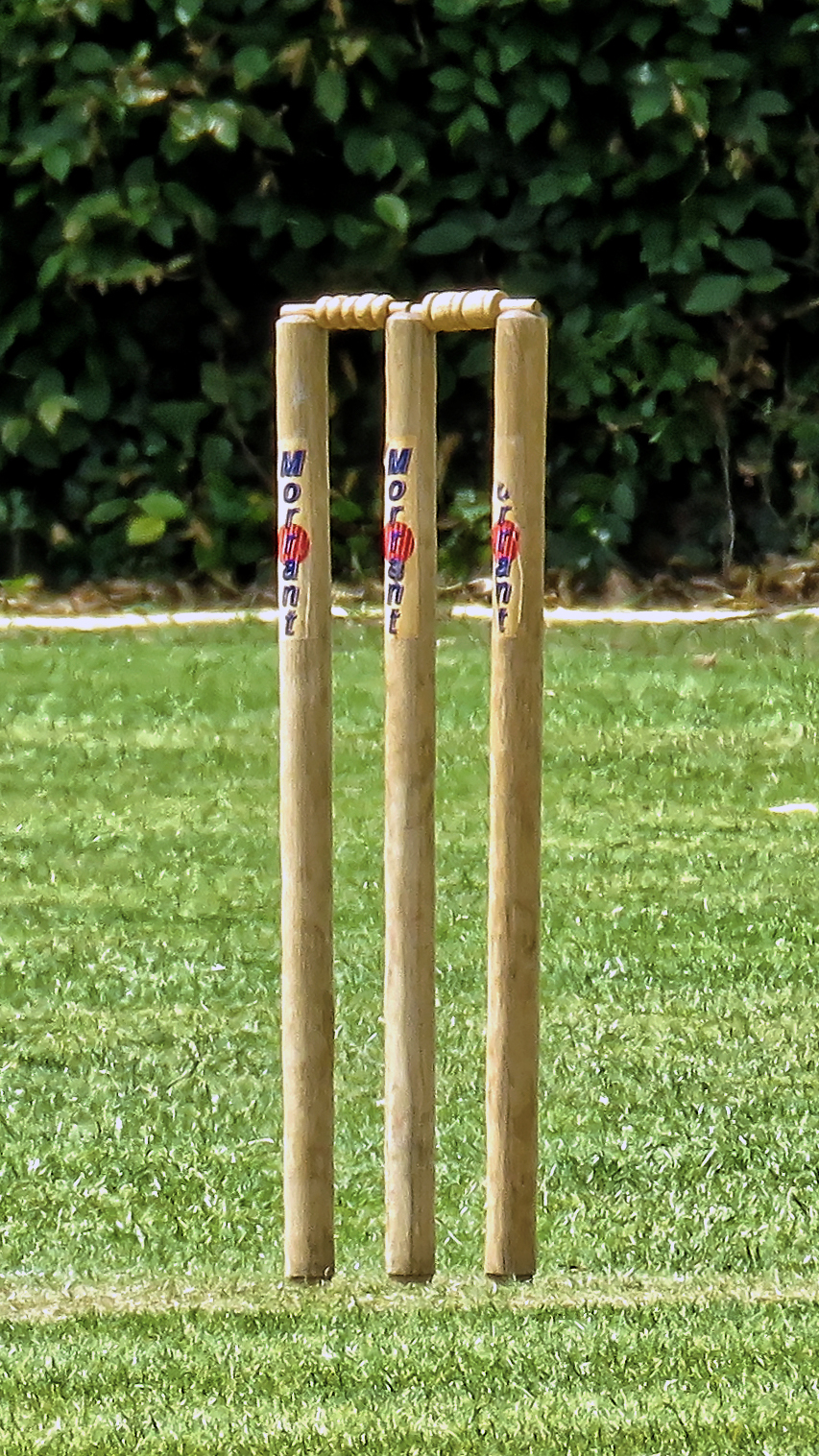
Day-night Tests typically use LED stumps and bails — the "Zing stumps" system, which features sensors in the stumps and bails that light up when the bails are dislodged. The LED lighting makes it immediately visible to the third umpire, players, and spectators when the stumps have been broken, even under floodlights.
The Zing stumps system also provides a data signal to the third umpire indicating the exact moment of bail dislodgement — useful in run-out and stumping decisions where determining whether the ball broke the stumps before or after the batsman's bat or foot crossed the crease can be decisive.
For fielding restriction and scoring purposes, LED stumps are functionally identical to traditional stumps — the laws governing dismissals, dead ball, and play remain the same. The LED system is purely a visibility and officiating enhancement.
Rules for the Twilight Session
Day-night Tests operate on a schedule that typically covers three sessions:
- Session 1 (afternoon): Starting around 2:00 pm or 1:00 pm local time, under natural light
- Session 2 (evening): Extending into the early evening as light fades, with floodlights gradually taking over
- Session 3 (night): Fully under floodlights, typically finishing around 9:00 pm or 10:00 pm
The twilight period — when both natural light and artificial light are present simultaneously — is regarded as the most challenging period for batsmen. The changing light conditions mean the ball can be harder to see as it transitions from being lit by the sun to being lit by floodlights. The ball appears different colours in the two light sources, and the combination can create visual difficulties that daytime or full-night conditions do not produce.
There are no specific Laws of Cricket that exclusively govern the twilight session — the same Laws apply throughout the match. However, ICC playing conditions for day-night Tests include provisions around:
- Light meters: Umpires can offer batsmen the option to leave the field for bad light during the twilight period, just as in a daytime Test. The light meter reading rather than the clock determines when light becomes unplayable.
- Start and end times: The schedule is set by the host board and ICC, ensuring the match spans the prime-time television window.
- Warm-up protocols: Players must be allowed time to warm up under floodlight conditions before play starts in the evening session, particularly if they have been off the field during a break.
Player Visibility Challenges
Day-night Test cricket presents genuine visibility challenges that players have spoken about extensively since the format's introduction.
Batsmen: Picking up the ball from the bowler's hand is the fundamental challenge for a batsman. Under floodlights, the pink ball shows up differently from the red ball under natural light. Many batsmen report that the ball appears to "arrive" faster under floodlights — not because it is literally quicker, but because the visual cues are different. The trajectory of a swinging ball can also appear more deceptive in artificial light.
Fielders: Judging a high ball hit straight up into the floodlights is significantly harder than under natural light. Fielders must deal with the glare of the lights and the change in how the pink ball appears at altitude against the dark sky. This has led to more dropped catches in the outfield during the floodlit sessions of day-night Tests.
Bowlers: Beyond the dew challenge, bowlers must also adapt their running in approach, as their shadow under floodlights can fall differently across the pitch depending on where the lights are positioned. This affects how a batsman sees the bowler during the delivery stride.
Pink Ball History and Adoption
The pink ball's journey from concept to international Test cricket took approximately a decade of development and testing.
Early development (2009–2012). The ICC began trialling pink balls in domestic competitions in various countries from around 2009. England and Wales Cricket Board (ECB) trialled pink balls in domestic county cricket, and Cricket Australia did the same in Sheffield Shield matches. Player and umpire feedback was gathered extensively.
First international day-night Test. The first day-night Test match in international cricket was played in November 2015 between Australia and New Zealand at Adelaide Oval. Australia won comprehensively. The match was a landmark moment — the first Test played substantially under floodlights, with the pink ball, on a traditional Test ground. Adelaide Oval became the home of day-night Test cricket in Australia.
India's reluctance and eventual adoption. Much as the BCCI had initially resisted DRS, India was slow to adopt day-night Tests. The BCCI was concerned about dew conditions in India, the impact on domestic audiences used to daytime cricket, and broadcaster preferences. India played their first day-night Test in November 2019 against Bangladesh in Kolkata — a monumental occasion at Eden Gardens that drew enormous crowds and wide television audiences.
Current status. As of 2026, day-night Tests are part of the ICC World Test Championship cycle. Multiple venues have hosted them, including Adelaide, Edgbaston, The Wanderers (Johannesburg), and Eden Gardens (Kolkata). The format is now an established part of the Test calendar, though it remains less common than traditional daytime Tests.
Notable Day-Night Test Results
Australia vs New Zealand, Adelaide, November 2015. The historic first. Australia won by three wickets in a tight match that demonstrated the format's potential for drama. The pitch and the pink ball produced conditions that challenged both teams significantly, and the match attracted a bumper crowd for the day-night sessions.
India vs Bangladesh, Kolkata, November 2019. India's entry into day-night Test cricket. India won inside two days — by an innings and 46 runs — in a match that highlighted how dominant the pink ball can be in spinning conditions in the subcontinent. Bangladesh, fielding a weakened side, were completely overwhelmed.
England vs West Indies, Edgbaston, August 2020. Played in a bio-secure bubble during the COVID-19 pandemic, this day-night Test featured highly competitive cricket in the twilight session and demonstrated that the format works well in English conditions under the Dukes pink ball.
Pakistan vs England, Rawalpindi, December 2022. Part of England's remarkable "Bazball" series in Pakistan, this day-night Test produced an extraordinary batting performance from England, who scored at extraordinary rates. The match illustrated how batting conditions can be very different in a pink ball Test under certain pitch and weather conditions.
Quick Reference Table
| Feature | Detail |
|---|---|
| Ball colour | Pink |
| Used in | Day-night Test matches |
| First international day-night Test | Australia vs New Zealand, Adelaide, November 2015 |
| India's first day-night Test | India vs Bangladesh, Kolkata, November 2019 |
| Key difference from red ball | More swing when new; dew affects grip in evening; different deterioration rate |
| Why not white ball? | Deteriorates too fast for Test cricket; wrong feel and behaviour |
| Why not red ball at night? | Poor visibility under floodlights |
| LED stumps used? | Yes — Zing stumps standard in day-night Tests |
| Twilight session challenge | Mixed natural/artificial light creates visibility difficulties |
| Major dew challenge | Fielding team bowling in final session faces slippery ball in dew conditions |
| Laws changed for pink ball? | No — same Laws apply; ICC playing conditions adjust scheduling and sessions |
Also read: wide ball rules | DRS explained | run out vs stumping
More on CricJosh: dead ball rules | LBW rule explained
Frequently Asked Questions
Does the pink ball swing more than the red ball? Generally, yes — particularly when the ball is new and the lacquer coating is fresh. The pink ball tends to produce more conventional swing in the early overs under floodlights than the red ball does under natural light. However, behaviour varies by manufacturer (Kookaburra vs Dukes vs SG) and by pitch and atmospheric conditions. In some conditions the difference is minimal; in others, the pink ball swings prodigiously.
Is there a rule about when the floodlights must be turned on? There is no strict Law of Cricket specifying when floodlights activate. The host board and ICC set the schedule, and floodlights are typically turned on in advance of natural light fading — often from the start of the second session — to allow players and umpires to adjust gradually rather than experiencing an abrupt light change.
Can batsmen refuse to play in the twilight session? Batsmen can be offered the option to leave the field for bad light in a day-night Test, exactly as in a daytime Test. The umpires use a light meter to assess whether conditions are below the minimum playable standard. However, if the light meter reading is within acceptable limits, batsmen cannot refuse to play simply because they find the twilight conditions challenging — that is a skill challenge, not a safety one.
Do the same ball-change rules apply in a day-night Test? Yes. The fielding team gets a new ball at the start of each innings and can take a second new ball after 80 overs, exactly as in a daytime Test. There are no additional ball changes specifically for the pink ball, though if the ball is damaged or lost, the umpires replace it with a ball of comparable wear, as in any Test.
Has the pink ball been used in any format other than Tests? No. The pink ball is specifically designed for day-night Test cricket. Limited-overs cricket under floodlights uses the white ball. There have been no ICC-sanctioned pink ball ODIs or T20Is. The pink ball is exclusively a Test match innovation.
Conclusion
The pink ball has brought something genuinely new to cricket's oldest and most prestigious format. Day-night Test cricket has opened the game to audiences who could never attend — or watch — traditional daytime Tests, and it has created tactical dimensions (dew, twilight visibility, early-evening swing) that have enriched the game's complexity.
The Laws themselves have not changed for pink ball cricket — Test cricket is Test cricket, governed by the same MCC Laws whether the ball is red, white or pink. What has changed is the environment in which those laws are applied, and that environment has enough unique characteristics to demand specific preparation, strategy, and adaptation from every team that plays under the lights.
For more cricket rules and formats explained clearly, visit our full cricket rules guide. You might also find our articles on over rate rules and fielding restrictions useful for understanding how different rules interact across formats.
Sources:
Share this article
Rahul Sharma
Expert in: Cricket RulesRahul Sharma has played district-level cricket in Mumbai for 8 years and has personally tested more than 50 bats, pads, gloves, and helmets across different price ranges. He joined CricJosh to help Indian club cricketers make smarter equipment choices without overpaying. His reviews are based on real match and net session use, not sponsored samples.
Why trust this review: Rahul has used every product in this review across multiple match and net sessions before writing a word. He buys equipment at retail price and accepts no free samples.
Related Articles


13 min read · 1 May 2026
14 min read · 1 May 2026