Powerplay Rules in Cricket: T20 vs ODI vs Test (2026)
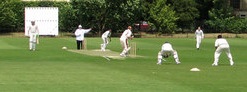
![Powerplay Rules in Cricket — Overs, Fielding Restrictions in T20, ODI & Test [2026]](/_next/image?url=%2Fimages%2Fcategories%2Frules-alt1.jpg&w=1200&q=75)
Share this article
The powerplay is one of the most tactically consequential phases in modern limited-overs cricket. With fewer fielders allowed outside the inner circle, the batting side has a genuine invitation to score freely — and the bowling side must find ways to take wickets despite having their options limited. Understanding exactly how powerplay rules work across different formats, and how smart teams use them, is essential to following the strategic battle in every limited-overs match.
This guide covers powerplay rules in T20 cricket, ODIs, and Test cricket, explains the fielding restrictions in plain terms, and looks at how powerplays are used at the highest level including in IPL 2026.
What is a Powerplay?
A powerplay is a designated phase of a limited-overs innings during which fielding restrictions apply — specifically, a limit on how many fielders can be positioned outside the inner fielding circle (the 30-yard circle marked on the field). The purpose of powerplay restrictions is to force the fielding team to keep most of their players close to the bat, giving the batting team more open gaps in the outfield and a greater opportunity to score boundaries.
The term "powerplay" reflects the advantage these restrictions give to the batting team. During powerplay overs, scoring rates are typically higher than in the middle overs of a limited-overs match precisely because there are fewer boundary fielders to save fours.
Powerplay rules differ meaningfully between T20 and ODI formats, and there is no formal powerplay in Test cricket. Each format has its own phase structure, with different numbers of overs, different restrictions, and different tactical implications.
Powerplay in T20 Internationals
In T20 International cricket, there is one mandatory powerplay — the first six overs of each team's innings (overs 1 through 6). During this powerplay, the fielding restrictions are:
- Only two fielders may be positioned outside the 30-yard fielding circle
- There is no restriction on where the two outside fielders are positioned — they can stand anywhere on the boundary
- The remaining nine fielders (including the wicketkeeper) must be within the 30-yard circle at the time of delivery
This six-over powerplay in T20s typically produces the highest scoring rate of the innings, combined with the highest wicket-taking risk. The best T20 opening partnerships look to plunder the powerplay, knowing that fielding teams are limited in their ability to protect the boundary.
After the mandatory six-over powerplay ends, the fielding restrictions are relaxed. In overs 7 through 20 of a T20, up to five fielders can be positioned outside the 30-yard circle. This is the standard restriction for the "non-powerplay" phase of a T20.
There is no optional powerplay in T20 cricket — unlike in the older ODI format. The six overs are fixed, regardless of whether the batting team would prefer more or fewer powerplay overs.
Powerplay in ODIs (Three Phases)
ODI cricket has a more complex powerplay structure, divided into three distinct phases across the 50-over innings.
Powerplay 1 (Overs 1-10) — Mandatory Batting Powerplay: This is the most restrictive phase. Only two fielders may be outside the 30-yard circle for the first ten overs. This is the phase equivalent to the T20 powerplay but lasts twice as long. Both opening bowlers typically try to take wickets during this phase, while the batting team aims to capitalise on the open field.
Powerplay 2 (Overs 11-40) — Middle Overs: During overs 11 to 40, a maximum of four fielders may be outside the 30-yard circle. This is the extended middle-overs phase of an ODI. The field is still more attacking than the final overs but more defensive than the powerplay. Captains typically use this phase to build pressure through dot balls and wickets, while batting sides look to rotate the strike and build platforms.
Powerplay 3 (Overs 41-50) — Death Overs: During the final ten overs, up to five fielders may be outside the 30-yard circle. The captain deploys most of their boundary fielders here, trying to restrict the batting side from clearing the ropes. This is the phase that favours the bowling team most in terms of fielding options.
A key historical note: the ICC has revised ODI powerplay rules multiple times over the years. An older format allowed captains to "call" an optional batting or fielding powerplay during specific overs — this optional powerplay system has been replaced by the current three-phase structure, which is simpler to understand and administer.
Powerplay in Tests
There is no formal powerplay in Test cricket. Fielding restrictions that mandate fielders inside the 30-yard circle do not apply in Tests. The fielding captain can position all their fielders wherever they choose at any point in a Test match.
The absence of powerplay restrictions in Tests is one of the fundamental differences between Test and limited-overs cricket. In Tests, a defensive field — with eight fielders spread across the outfield — is entirely legitimate. A batsman facing a tight off-side channel with three slips, two gullies, a cover point, and a mid-off has no rule-based protection beyond their own skill.
This makes field-setting in Test cricket a more open tactical canvas than in limited-overs cricket. The batting team cannot rely on powerplay restrictions to create scoring opportunities — they must work for every run through shot selection and running between wickets.
Fielding Restrictions During Powerplay
Beyond the limit on fielders outside the 30-yard circle, powerplay rules also include restrictions on how many fielders can be positioned on the leg side behind square.
No more than two fielders may be positioned behind square on the leg side at the time of delivery — this applies during powerplay overs and also outside powerplay overs. This restriction prevents the fielding team from "stacking" fielders in the fine leg/square leg area to combat leg-side sweep shots.
A violation of the fielding restriction — too many fielders outside the circle, or more than two behind square leg — results in a no-ball. The batting side receives one penalty run, the delivery is re-bowled, and in limited-overs cricket, a free hit follows on the next ball. Fielding restriction no-balls are monitored by the on-field umpires.
The on-field umpires are positioned at both ends of the pitch to monitor both bowling crease violations and fielding positions. The square leg umpire specifically watches for fielding restriction violations on the leg side.
Can Fielding Captains Take Powerplay Early?
In the current ODI structure, the powerplay phases are fixed — there is no mechanism for the fielding or batting captain to elect to take a powerplay early or delay it. Powerplay 1 is always overs 1-10, Powerplay 2 is always overs 11-40, and Powerplay 3 is always overs 41-50.
This was not always the case. In the period between approximately 2005 and 2012, the ICC experimented with "batting powerplays" and "fielding powerplays" that teams could call at a time of their choosing within defined windows. These optional powerplays introduced significant tactical variety but also added complexity that many fans found difficult to follow.
The current fixed-phase system was adopted for its simplicity and has been in place since the ICC's 2012 playing conditions revision. In T20 cricket, there has never been an optional powerplay — the six-over block at the start of the innings has always been fixed.
How Batting Teams Exploit Powerplay
The powerplay creates a specific tactical opportunity for batting teams, and the best T20 and ODI openers are specialists at maximising powerplay scoring.
Attacking the field: With only two fielders allowed outside the 30-yard circle, there are large gaps in the outfield. A well-timed drive through the covers or a pull shot to the long-on boundary has much less chance of being cut off by a boundary fielder. Batting teams look for areas where the two designated deep fielders are not positioned — leaving one side of the ground relatively unguarded.
Taking on the short boundary: In grounds where one boundary is notably shorter — the Wankhede's short leg-side boundary, for example — batting teams will specifically plan to target that area during the powerplay when only one deep fielder can be stationed there.
Partnership building early in ODIs: In ODIs, the 10-over mandatory powerplay serves a dual purpose: it is an opportunity to score freely, but also a phase to survive in. Losing two or three wickets in the first ten overs, even for a high powerplay score, significantly weakens a team's middle-overs position.
Powerplay specialists: Modern T20 teams specifically recruit or develop "powerplay openers" — batsmen who can attack in the first six overs and then sacrifice their wicket if needed, allowing a different type of batsman to consolidate in overs 7-15. This role — the aggressive powerplay batter — is one of the most distinct and well-compensated positions in T20 franchise cricket.
Powerplay in IPL 2026
IPL 2026 follows the standard T20 powerplay structure: the first six overs of each innings are a mandatory powerplay, with only two fielders permitted outside the 30-yard circle. This is consistent with ICC T20 rules.
IPL 2026 powerplay trends have reflected the evolution of T20 batting. Opening partnerships increasingly prioritise aggressive intent from ball one, with openers taking on pace and length rather than playing themselves in. The average powerplay score across IPL 2026 matches has continued the trend of rising powerplay scoring rates seen throughout the 2020s.
Key tactical developments in IPL 2026 powerplays:
Left-right opening combinations: Most IPL franchises favour a left-right opening combination to prevent bowlers from settling into a single line. The alternating targets also disrupt the fielding captain's powerplay field-setting, as the two permitted deep fielders must shift between deliveries.
Pace vs spin in the powerplay: Several IPL 2026 teams have deployed a spinner in the powerplay — particularly on slower surfaces where pace bowlers struggle with swing — taking advantage of the two-fielder restriction to create attacking off-side fields for off-spin or leg-spin.
Death-over powerplay exploitation: With the second powerplay (overs 41-50 equivalent in T20 being the "death" overs 17-20), the five permitted boundary fielders are placed to protect specific areas, and batting teams are increasingly precise about where the gaps are and how to exploit them through pre-planned shot combinations.
For more on the LBW rule and how it interacts with batting decisions during the powerplay, see our LBW rule guide.
Quick Reference Table
| Format | Powerplay Overs | Fielders Allowed Outside Circle | Other Phases |
|---|---|---|---|
| T20 (Powerplay) | Overs 1-6 | 2 | Overs 7-20: max 5 outside circle |
| ODI (Powerplay 1) | Overs 1-10 | 2 | — |
| ODI (Powerplay 2) | Overs 11-40 | 4 | — |
| ODI (Powerplay 3) | Overs 41-50 | 5 | — |
| Test | No powerplay | No restriction | No restriction at any point |
| Fielding restriction no-ball | Any format | Triggered if rule violated | Free hit in limited-overs |
| Leg-side behind-square limit | All formats (including powerplay) | Max 2 behind square leg | Applies throughout entire innings |
| Optional powerplay (ODI) | Abolished 2012 | Not applicable | Current phases are fixed |
Also read: no-ball rules | free hit rule | wide ball rules
More on CricJosh: DLS method explained | impact player rule
Frequently Asked Questions
What happens if a fielder steps outside the 30-yard circle during a powerplay delivery? If a fielder is outside the 30-yard circle when the ball is delivered during a powerplay — and this would mean more than two fielders are outside the circle — a no-ball is called. The batting side receives one penalty run, the delivery is re-bowled, and in limited-overs cricket, a free hit follows on the next ball.
Is there any situation where the powerplay can be extended in T20 cricket? No. The T20 powerplay is fixed at six overs. There is no mechanism to extend, shorten, or delay it. The first six overs of every T20 innings are always powerplay overs, regardless of whether wickets have fallen or how the game is progressing.
Does the powerplay apply in super overs? A super over is a single over played in full, with all fielding restrictions applying as they would during a regular over. Since a super over is just one over and falls outside the "first six overs" powerplay window — technically it is a separate mini-game — the ICC playing conditions specify that fielding restrictions for a super over follow specific rules, typically allowing only two fielders outside the circle. See our super over rules guide for full details.
Can a spinner bowl during the powerplay in ODIs? Yes, absolutely. There is no restriction on which type of bowler is used during the powerplay. Many teams use a spinner in the powerplay overs, particularly in the middle segment of an ODI (overs 11-40), where the field restrictions are slightly relaxed and a spinner can attack with tight off-side fields. In T20s, powerplay spinners are less common but not unknown.
Why is the 30-yard circle the threshold for fielding restrictions? The 30-yard circle (approximately 27 metres) was chosen as the inner fielding circle because it reflects a manageable boundary for fielders in catching and saving-single positions. Fielders within the circle are in positions where they can realistically stop singles and take catches off aggressive shots without being stationed on the boundary. The circle creates a meaningful distinction between "attacking" and "defensive" fielding positions.
The powerplay remains the most consistently exciting phase of any limited-overs cricket match. For batters, it is an opportunity to dictate terms before bowlers find the right lengths and fielding restrictions are lifted. For bowlers, it is the highest-stakes phase of the innings — a wicket in the powerplay is disproportionately valuable because the batting team loses an aggressive opener without having fully capitalised on the field restrictions. For more cricket rules explained in detail, explore the full series, and read our guide on what DRS is and how it works.
Share this article
Rahul Sharma
Expert in: Cricket RulesRahul Sharma has played district-level cricket in Mumbai for 8 years and has personally tested more than 50 bats, pads, gloves, and helmets across different price ranges. He joined CricJosh to help Indian club cricketers make smarter equipment choices without overpaying. His reviews are based on real match and net session use, not sponsored samples.
Why trust this review: Rahul has used every product in this review across multiple match and net sessions before writing a word. He buys equipment at retail price and accepts no free samples.
Related Articles


13 min read · 1 May 2026
14 min read · 1 May 2026