Cricket Rules for Kids

Share this article
So you want to learn cricket? Brilliant choice. Cricket is played by millions of kids across India — in parks, on streets, in school grounds, and on proper cricket fields. It is exciting, it is strategic, and it is incredibly fun once you understand the basics.
This guide is written for kids aged 7-14 (and parents who want to explain the game). No complicated jargon. No confusing diagrams. Just simple, clear cricket rules explained in a way that makes sense.
What Is Cricket?
Cricket is a bat-and-ball game played between two teams of 11 players. One team bats (tries to score runs) and the other team bowls and fields (tries to stop runs and get batters out). After both teams have batted, the team with more runs wins.
Think of it like this: Cricket is like a race. Both teams take turns running, and whoever runs more laps (scores more runs) wins.
The Cricket Field
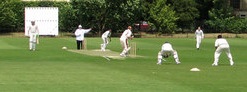
A cricket field is a big oval-shaped ground. In the middle of the field is a rectangular strip called the pitch (also called the "wicket"). The pitch is 22 yards long — about the length of two school buses parked end to end.
At each end of the pitch are three wooden sticks standing upright — these are called stumps. On top of the stumps sit two tiny wooden pieces called bails. Together, the stumps and bails are called the wicket.
The batter stands at one end of the pitch, protecting the stumps. The bowler runs in from the other end and bowls the ball. The rest of the fielding team spreads out around the field to catch or stop the ball.
For a detailed guide to all fielding positions, check out our cricket field positions page.
How Do You Score Runs?
After hitting the ball, the batter runs to the other end of the pitch. If both batters (there are always two batters on the field) successfully swap ends, that is 1 run. They can keep running back and forth:
- 1 run — batters swap ends once
- 2 runs — batters swap ends twice (run there and back)
- 3 runs — batters swap ends three times (rare, the ball has to go very far)
Bonus runs without running:
- 4 runs (a "four" or "boundary") — the ball rolls or bounces along the ground and crosses the boundary rope at the edge of the field. No running needed!
- 6 runs (a "six") — the ball is hit so hard it flies over the boundary rope without bouncing. This is the most exciting shot in cricket!
Extra runs (given by the umpire):
- Wide — if the bowler bowls too far from the batter, the umpire gives 1 extra run
- No ball — if the bowler oversteps the line (crease) or bowls dangerously, 1 extra run is given plus the batter gets a free hit
How Do You Get Out?
There are several ways a batter can be given "out" (dismissed). Here are the most common ones:
1. Bowled
The ball hits the stumps and knocks the bails off. This is the simplest dismissal — the bowler beat the batter completely.
2. Caught
The batter hits the ball and a fielder catches it before it bounces. This can be a catch by anyone on the field — the bowler, the wicketkeeper (the person behind the stumps wearing gloves), or any other fielder.
3. LBW (Leg Before Wicket)
If the ball would have hit the stumps but the batter's leg (or body) gets in the way, the umpire can give the batter out. Think of it as: "Your leg saved the stumps, but that's not fair — you're out!"
4. Run Out
While the batters are running between the wickets, a fielder throws the ball and hits the stumps before the batter reaches the crease (safe zone). It is like being tagged out in other games.
5. Stumped
The batter steps forward to hit the ball, misses, and the wicketkeeper behind removes the bails while the batter is still out of the crease. The batter was too far from home!
For all the rules in detail, visit our complete cricket rules page.
The Three Formats of Cricket
Cricket comes in three main formats, like different versions of the same game:
T20 (Twenty20) — The Fast One
- Each team bats for 20 overs (120 balls)
- A match takes about 3 hours
- Lots of big hitting and excitement
- IPL is a T20 tournament
- Think of it as: A sprint — fast and furious
ODI (One Day International) — The Medium One
- Each team bats for 50 overs (300 balls)
- A match takes about 8 hours (one full day)
- More strategy, building an innings
- World Cup is played in this format
- Think of it as: A middle-distance race — steady pace with a strong finish
Test Cricket — The Long One
- Each team bats twice (two innings each)
- A match lasts up to 5 days
- The ultimate test of skill, patience, and endurance
- Think of it as: A marathon — slow, strategic, and the toughest challenge
What Is an "Over"?
An over is a set of 6 balls bowled by one bowler from one end of the pitch. After 6 balls, a different bowler bowls the next over from the other end. No bowler can bowl two overs in a row.
So in a T20 match with 20 overs, that means 120 balls per team. In an ODI with 50 overs, that means 300 balls per team.
Fielding Positions Made Simple
Cricket has some funny fielding position names. Here are the important ones explained simply:
| Position | Where They Stand | What They Do |
|---|---|---|
| Wicketkeeper | Right behind the stumps | Catches balls the batter misses (like a baseball catcher) |
| Slip | Next to the wicketkeeper | Catches edges (when the ball just touches the bat) |
| Mid-off | Straight in front of the batter (off side) | Stops straight drives |
| Mid-on | Straight in front of the batter (leg side) | Stops straight hits |
| Cover | Between mid-off and point | Stops drives and throws at the stumps |
| Point | Square on the off side | Stops cut shots |
| Fine Leg | Behind the batter on the leg side | Catches hook and flick shots |
| Long-on / Long-off | Deep in the outfield | Catches big hits and stops boundaries |
The off side = the side of the pitch where the batter's bat faces when in stance The leg side = the side of the pitch behind the batter's legs when in stance
Gully Cricket Rules (Playing With Friends)
Gully cricket is the most popular way kids play cricket in India. Here are the most common rules:
Basic Rules
- Teams: Any number (3 vs 3, 5 vs 5, or even 2 vs 2)
- Pitch: Any flat surface — a road, a park, a parking area
- Stumps: Real stumps, a stack of bricks, a bag, or draw them on a wall
- Ball: Tennis ball (most common), rubber ball, or tape ball
Common Gully Cricket Rules
- One-tip one-hand catch — if the ball bounces once and a fielder catches it with one hand, the batter is out. This rule makes fielding more fun with fewer players
- Last man bats on — when the second-to-last batter gets out, the last batter continues alone (they keep strike every ball). Some groups play "last man retires at 50"
- No LBW — too many arguments! Most gully cricket games skip the LBW rule
- Road boundaries — common rules include "over the wall is out" or "into Mrs. Sharma's garden is out and you go get the ball"
- Auto wicketkeeper — no one stands behind the stumps. If the batter misses and the ball hits the stumps, they are bowled
Starting a Game
- Toss: Flip a coin or the classic "odd-even" (both captains show fingers, caller says odd or even)
- Winner chooses to bat or bowl first
- Pick teams: Captains take turns choosing players
- Set boundaries: Agree on what counts as 4, 6, and out
- Play!
Cricket Scoring: How to Read a Scorecard
When you watch cricket on TV, the score looks like this: IND 156/3 (18.2 overs)
Here is what each part means:
- IND — the team batting (India)
- 156 — total runs scored so far
- /3 — number of batters out (3 out of 11)
- (18.2 overs) — 18 overs and 2 balls have been bowled
Other numbers you'll see:
- Strike rate — how fast a batter scores (runs per 100 balls). A strike rate of 150 means 150 runs per 100 balls — very fast!
- Economy rate — how many runs a bowler gives per over. An economy of 6 means 6 runs per over — that's decent in T20
- Average — runs scored divided by times out. A batting average of 50 means the batter scores 50 runs every time they bat (on average)
For a detailed scoring guide, read our how to read a cricket scorecard guide.
Equipment You Need to Start
Minimum (Gully Cricket)
- A bat (even a wooden plank works!)
- A tennis ball
- Something for stumps (bricks, a bag, or draw on a wall)
- Open space
For School or Club Cricket
- Cricket bat — a Kashmir willow bat works great for beginners. Check our best cricket bats under ₹1,000 guide
- Batting pads — protect your legs from the ball
- Batting gloves — protect your hands. See our best cricket gloves under ₹1,500 guide
- Helmet — ALWAYS wear a helmet when facing a hard ball. Check our best cricket helmets under ₹2,000 guide
- Cricket shoes — proper grip prevents slipping. See our best cricket shoes under ₹2,000 guide
- Cricket ball — your coach or academy will provide this
For a complete equipment list, read our complete cricket kit under ₹5,000 guide.
Fun Cricket Facts for Kids
- The longest Test match lasted 12 days (England vs South Africa, 1939) — and it ended as a draw because England had to catch their ship home!
- The fastest ball ever bowled was 161.3 kph by Shoaib Akhtar of Pakistan — that's faster than a car on the highway
- Sachin Tendulkar made his international debut at age 16 — he might have been your age when he played for India!
- A cricket ball weighs about 156 grams — roughly the same as a smartphone
- The IPL is the richest cricket league in the world — some players earn over ₹20 crore per season
How to Get Better at Cricket
- Practice regularly — even 30 minutes of daily practice helps. See our cricket batting drills at home guide
- Watch cricket actively — don't just watch the ball. Watch where the fielders stand, how the bowler varies their delivery, and how batters build an innings
- Join a cricket academy — professional coaching accelerates your improvement. We have guides for cricket academies in Delhi, Mumbai, Chennai, and 20+ other cities
- Play as much as you can — gully cricket counts! Every ball you face or bowl makes you better
- Stay fit — see our cricket fitness for beginners guide
- Read the complete rules — as you grow as a player, understanding the rules deeply gives you an edge
Video Resources
Here are curated video resources to help kids learn cricket:
1. Cricket Rules for Beginners - Simple Explanation
- Channel: Kids Cricket Academy
- Duration: 14:50
- Description: Easy-to-understand cricket rules for children
2. How to Play Cricket - Beginner's Guide
- Channel: Cricket Coaching Academy
- Duration: 12:20
- Description: Complete beginner's guide to playing cricket
3. Cricket Scoring Explained for Kids
- Channel: Cricket Education Channel
- Duration: 10:15
- Description: How runs, wickets, and scoring work in cricket
4. Cricket Positions and Roles Explained
- Channel: Kids Cricket Learning
- Duration: 9:40
- Description: Understanding different cricket positions for young players
FAQ
What age should kids start playing cricket?
Children can start playing informal cricket (tennis ball, soft ball) as young as 5-6 years old. Formal coaching at cricket academies typically begins at age 7-8. Most state-level selection pathways begin at Under-13 (age 11-12), so starting structured coaching by age 8-9 gives enough time to develop skills.
Is cricket dangerous for kids?
With proper equipment (helmet, pads, gloves), cricket is very safe. The main risk is from the hard leather ball in competitive cricket — which is why helmets are mandatory for all junior batters and close fielders. For gully cricket with a tennis ball, there is virtually no injury risk.
How many players are on a cricket team?
Each team has 11 players. All 11 field when their team is bowling. When batting, two batters are on the field at a time. The rest wait for their turn in the pavilion (dugout).
What is the difference between batting and bowling?
Batting means using the bat to hit the ball and score runs. Bowling means running in and throwing (with a straight arm) the ball at the batter to try and get them out. Some players are specialists (only bat or only bowl), while all-rounders do both.
Can girls play cricket?
Absolutely! Women's cricket is one of the fastest-growing sports in India. The Women's Premier League (WPL) is India's women's T20 tournament, and the Indian women's cricket team plays at the highest international level. For women's cricket inspiration, read about Smriti Mandhana and Deepti Sharma.
What's Next?
Now that you know the basics, explore more:
Share this article
Rahul Sharma
Expert in: Cricket RulesRahul Sharma has played district-level cricket in Mumbai for 8 years and has personally tested more than 50 bats, pads, gloves, and helmets across different price ranges. He joined CricJosh to help Indian club cricketers make smarter equipment choices without overpaying. His reviews are based on real match and net session use, not sponsored samples.
Why trust this review: Rahul has used every product in this review across multiple match and net sessions before writing a word. He buys equipment at retail price and accepts no free samples.
Related Articles

13 min read · 1 May 2026
14 min read · 1 May 2026